

The stock market is one of the most important parts of the global financial system, where shares of companies are bought and sold every day. To make smart investment decisions, it is very important to understand stock market trends.
Stock market trends refer to the overall direction in which the market or a particular stock is moving over time. These trends help investors and traders understand whether prices are rising, falling, or moving within a stable range. By studying these movements, people can make better decisions about when to buy, sell, or hold stocks.
In today’s fast-changing financial world, stock prices are influenced by many factors such as economic conditions, company performance, global events, and investor emotions. Because of this, understanding market trends has become more important than ever for successful investing.
Stock market trends not only help in identifying profit opportunities but also reduce the risk of losses by guiding investors with clearer market direction. Whether you are a beginner or an experienced investor, learning about trends is essential for building strong financial knowledge.
In this guide, you will learn everything about stock market trends, including their types, importance, factors, how to identify them, and tips for making smarter investment decisions.
What Are Stock Market Trends?
Stock market trends refer to the general direction in which the prices of stocks or the overall market move over a specific period of time. These trends help investors understand whether the market is going up, going down, or staying stable.
In simple words, a stock market trend shows the overall movement of prices rather than focusing on short-term changes. It helps investors see the bigger picture of the market.
How Stock Prices Move
Stock prices do not move in a straight line. Instead, they change based on buying and selling activity.
- When more people buy stocks, prices go up
- When more people sell stocks, prices go down
- When buying and selling are balanced, prices stay stable
Basic Idea of Market Direction
There are three main directions in the stock market:
- Upward movement (prices rising)
- Downward movement (prices falling)
- Sideways movement (no major change)
Simple Understanding
In simple words, stock market trends show the overall direction of the market, helping investors understand how prices are moving and what it means for future decisions.
you may also like it;
Market Predictions: Future Trends & Expert Forecasts
Investment Opportunities: Best Ways to Grow Your Wealth
Financial Market News: Latest Trends, Updates & Insights
Economic Analysis: Complete Guide to Trends, Data & Decisions
Types of Stock Market Trends
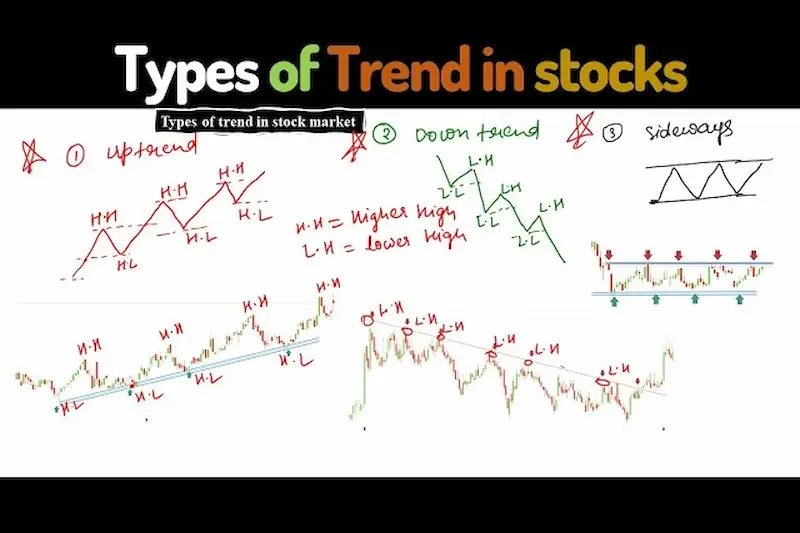
Stock market trends are generally divided into three main types. Each type shows a different direction of market movement and helps investors understand how prices are behaving over time.
1. Uptrend (Bull Market)
An uptrend occurs when stock prices are consistently rising over time
- Prices move upward
- Investors feel confident
- More buying than selling
- Strong market performance
2. Downtrend (Bear Market)
A downtrend happens when stock prices keep falling for a period of time
- Prices move downward
- Investors become cautious
- More selling than buying
- Weak market performance
3. Sideways Trend (Range-Bound Market)
A sideways trend occurs when prices move within a limited range without a clear upward or downward direction
- Prices move within a fixed range
- No strong buying or selling pressure
- Market stays stable
- Uncertain investor sentiment
Importance of Stock Market Trends
Stock market trends are very important for investors and traders because they help in understanding how the market is moving and what decisions should be made. By studying trends, people can reduce risks and improve their chances of earning profit
Better Investment Decisions
Stock market trends help investors decide when to buy or sell stocks based on market direction
- Helps in timing investments
- Supports smart decision-making
- Reduces confusion in trading
Reduces Financial Risk
Understanding trends helps avoid unnecessary losses by showing market behavior clearly
- Identifies risky market conditions
- Prevents emotional trading
- Helps protect capital
Identifies Profit Opportunities
Trends help investors find the best time to enter or exit the market
- Spot rising stocks early
- Exit before major losses
- Take advantage of market movements
Improves Trading Strategies
Traders use trends to create better and more effective strategies
- Technical analysis becomes easier
- Helps in short-term trading
- Supports long-term planning
Helps Understand Market Behavior
Trends show how the market reacts to news, events, and economic changes
- Tracks investor sentiment
- Understands price movements
- Predicts possible changes
Simple Understanding
In simple words stock market trends are important because they help investors make better decisions reduce risk find profit opportunities and understand how the market behaves
Factors That Affect Stock Market Trends
Stock market trends are influenced by many different factors that can change prices and overall market direction. Understanding these factors helps investors predict market movements more effectively
Economic Conditions
The overall economy plays a big role in stock market trends
- GDP growth or decline
- Inflation rates
- Interest rate changes
- Employment levels
Company Performance
A company’s financial health directly affects its stock price
- Profit and revenue reports
- Business growth
- Product success or failure
- Management decisions
Global Events
International events can quickly impact the stock market
- Wars or conflicts
- Global economic changes
- Natural disasters
- Political instability
Government Policies
Government decisions can influence investor confidence and market movement
- Tax changes
- Trade policies
- Regulations
- Budget announcements
Investor Sentiment
Market trends are also affected by how investors feel about the market
- Fear and panic selling
- Overconfidence and buying
- Market rumors
- Public expectations
Supply and Demand
Stock prices move based on buying and selling pressure
- High demand increases prices
- High supply lowers prices
- Balance creates stability
Simple Understanding
In simple words stock market trends are affected by economic conditions company performance global events government policies investor emotions and supply and demand
How to Identify Stock Market Trends
Identifying stock market trends is very important for making smart investment decisions. Investors use different tools and methods to understand whether the market is moving upward, downward, or staying stable
Using Price Charts
Price charts help investors visually understand market movement over time
- Show past and current prices
- Help identify patterns
- Make trends easier to understand
Moving Averages
Moving averages help smooth out price data to show the overall trend clearly
- Shows average price over time
- Helps identify uptrend or downtrend
- Reduces short-term fluctuations
Support and Resistance Levels
These levels help identify where prices may stop or reverse
- Support: price level where stocks stop falling
- Resistance: price level where stocks stop rising
- Helps predict price movement
Volume Analysis
Trading volume shows how many shares are being bought or sold
- High volume confirms strong trend
- Low volume shows weak trend
- Helps understand market strength
Technical Indicators
Indicators help traders analyze market behavior more deeply
- RSI (Relative Strength Index)
- MACD (Moving Average Convergence Divergence)
- Bollinger Bands
Simple Understanding
In simple words stock market trends can be identified using charts moving averages support and resistance levels trading volume and technical indicators
Role of Technology in Stock Market Trends
Technology has made stock market analysis faster, easier, and more accurate. Today investors and traders use advanced tools to understand market trends in real time and make better decisions
Artificial Intelligence (AI)
AI helps analyze large amounts of market data quickly and accurately
- Predicts market movements
- Identifies trading opportunities
- Reduces human error
Big Data Analysis
Big data helps process huge volumes of financial information
- Analyzes market patterns
- Studies customer behavior
- Improves decision-making
Algorithmic Trading
Algorithms are computer programs that automatically execute trades
- Fast buying and selling
- Reduces emotional trading
- Improves efficiency
Trading Apps and Platforms
Modern apps make stock trading simple and accessible
- Real-time price updates
- Easy buying and selling
- Market news and alerts
Predictive Analytics Tools
These tools help forecast future market trends
- Uses historical data
- Identifies possible outcomes
- Helps in planning investments
Simple Understanding
In simple words technology helps investors understand stock market trends faster and more accurately using AI data analysis and advanced trading tools
Benefits of Understanding Stock Market Trends

Understanding stock market trends provides many advantages for investors and traders. It helps in making smarter decisions and improving overall investment results
Better Entry and Exit Timing
Knowing trends helps investors choose the right time to buy or sell stocks
- Enter at the right price
- Exit before losses increase
- Improve profit chances
Higher Profit Potential
Following trends increases the chances of earning better returns
- Identify growing stocks early
- Take advantage of market movements
- Maximize investment gains
Reduced Investment Risk
Trends help investors avoid unnecessary losses by understanding market direction
- Avoid bad investments
- Reduce emotional decisions
- Protect capital
Improved Financial Planning
Stock market trends help in long-term financial planning
- Set realistic investment goals
- Plan future investments
- Manage portfolio better
Smarter Decision Making
Investors can make more informed and confident decisions
- Based on data not guesswork
- Better understanding of market behavior
- Increased confidence in trading
Simple Understanding
In simple words understanding stock market trends helps investors make better decisions reduce risk earn higher profits and plan their finances more effectively
What are stock market trends?
Stock market trends refer to the overall direction in which stock prices move over time, such as upward, downward, or sideways movement
Why are stock market trends important?
They help investors make better decisions, reduce risk, and identify profitable opportunities in the market
What are the main types of stock market trends?
The three main types are uptrend (bull market), downtrend (bear market), and sideways trend (range-bound market)
Conclusion
Stock market trends play a very important role in helping investors understand the overall direction of the market. They show whether prices are rising, falling, or moving in a stable range, which makes it easier to plan investments wisely
By learning about trends, investors can improve decision-making, reduce risks, and identify profitable opportunities in the market. It also helps in understanding how economic conditions, company performance, and global events affect stock prices
In today’s fast-moving financial world, understanding stock market trends is essential for both beginners and experienced traders. With the help of charts, indicators, and technology, anyone can analyze market behavior more effectively
In simple words, stock market trends help investors make smarter choices, stay prepared for market changes, and achieve long-term financial success